by
Stanisław Żaryn and Pawel Styrna
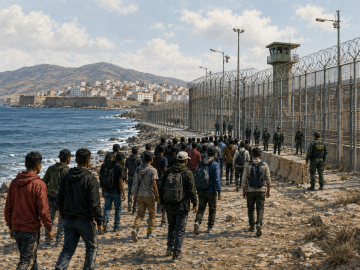
During the summer of 2026, significant media attention was devoted to the sudden – but not surprising – incursion by tens of thousands of illegal migrants into the Spanish city of Ceuta.[1] However, as important, disturbing, and destabilizing Ceuta-like crises and border rushes are, a dangerous migrant crisis and hybrid war continues to brew – and is now in its fifth year – on NATO’s eastern flank, where the Russian ally and satellite state of Belarus borders Poland, Lithuania, and Latvia. The crisis shows that migrant influxes can, and are, weaponized by hostile anti-Western regimes wishing to pressure, weaken, and destabilize Western societies. These, in turn, must be ready to deter, contain, and fight back against this form of hybrid warfare. It also demonstrates that a determination by governments to stand firm can keep the crisis in check, thus refusing to reward the hostile regimes employing weaponized migration by denying them the concessions they desire. For now, the crisis on NATO’s eastern flank is tense and difficult but contained. However, this should not be an excuse for the impacted nations to let their guard down. It is crucial to remember that the hostile pressure and threats, such as that of terrorist infiltration, remain, and the adversary continues to adapt and probe NATO defenses.
In the West, illegal mass migration is often viewed through a humanitarian, sentimental, and even romantic perspective. Pro-mass-migration politicians, activists, journalists, academics, and commentators consistently depict it in this manner to the broader public, hoping to convince Western societies – through emotive urgency – to quickly allow in waves of illegal migrants and not ask too many questions or worry about security and vetting. As a liberal Polish parliamentarian implored on social media in 2021, “just let these people in already, and we’ll sort out who they are later.”[2] Western societies are particularly vulnerable to such appeals and emotional blackmail due to guilt over past colonialism, imperialism, and racism; however, this blackmail is much less effective in Central and Eastern Europe. Either way, supporters of mass migration consistently portray illegal migrants storming various borders of the Western world – be it the U.S.-Mexico border, the Mediterranean coasts of Spain and Italy, or Poland’s border with Belarus – as desperate refugees fleeing violence and terror or brave pioneers simply seeking a “better life.” The fact that hostile regimes routinely attempt to turn illegal migration into weapons against their enemies is a highly inconvenient truth for the pro-mass-migration lobby.
Examples of instrumentalized migration are plentiful. In 1980, to damage the U.S., the Soviet-aligned communist regime of Fidel Castro facilitated an exodus of 125,000 Cubans into Florida, which included criminals, the mentally-ill, and spies.[3] In more recent years, Turkey’s Islamist prime minister, Recep Tayyip Erdogan, repeatedly threatened to “open the gates” and allow waves of illegal migrants to cross into Europe from Turkish territory if his demands, which included more European Union money for Ankara, as well as NATO military backing in Syria and political concessions like visa-free travel to Europe. He followed through on his threat in early 2020.[4] In the summer of 2026, as many experts argued, the Ceuta migrant incursion was also a form of hybrid war by Morocco against Spain.[5] Although the case of Mexico vis-à-vis the U.S. is somewhat less extreme, it also has a long tradition of using mass illegal migration – both of its own citizens, and, later, also those passing through its territory from the south – to pressure of influence American policy.[6]
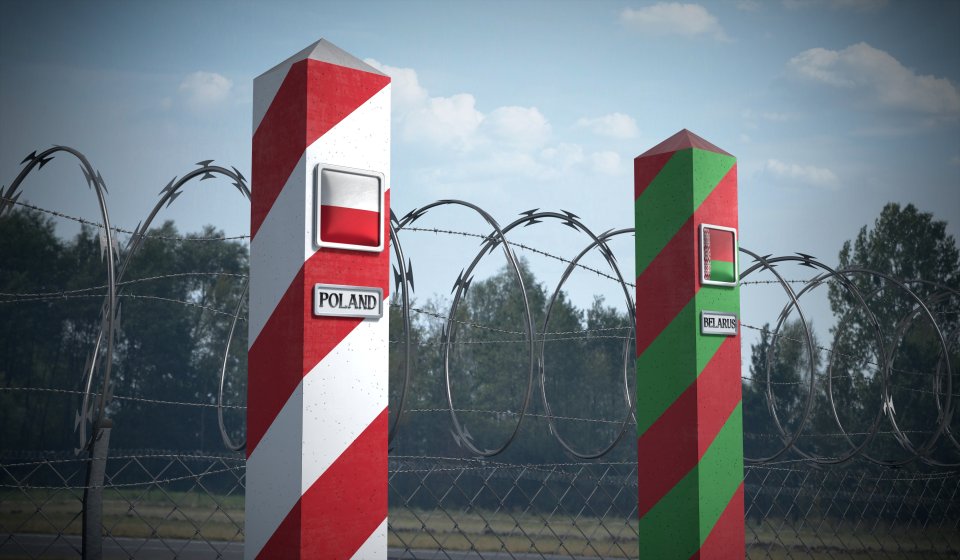
The migrant crisis on the Belarus-NATO border is, of course, yet another striking example of hybrid warfare via weaponized migration. The fact that this operation has been sustained for so many years, that attacks performed by migrants are being centrally managed and, depending on circumstances, migratory pressure is redirected between Poland, Lithuania and Latvia, and that the operation is being complemented with further instruments of destabilization, all indicates that we are dealing with a deliberate, carefully designed operation.
Strikingly, the crisis broke out in a region where mass migration from the Third World did not exist as a notable phenomenon; most of the migrants crossing that frontier were nationals of the former Soviet republics that gained independence with the fall of the Soviet Union in 1991. The direct cause of the crisis was the presidential election in Belarus in August 2020. The dictator of Belarus, Alexander Lukashenka, claimed an overwhelming victory against opposition leader Sviatlana Tsikhanouskaya, but was widely accused by the West of having rigged the election. When large-scale protests broke out, he crushed them ruthlessly. The EU responded with sanctions on Belarusian officials, which further angered Lukashenka. Poland and the Baltic states were particularly supportive of the democratic opposition in Belarus.
In the summer of 2021, as Lukashenka threatened to “flood” Europe with “drugs and migrants,” the crisis began as Belarus and Russia started transporting illegal migrants from the Middle East into their territories.[7] Flown into Minsk, the migrants were subsequently transported to the borders of Poland, Lithuania, and Latvia and encouraged to rush the border, enter illegally, and make their way to Germany and other wealthy European nations with generous welfare systems. The numbers tell much of the story, with illegal crossings of the Poland-Belarus border skyrocketing from 129 in 2020 to almost 40,000 in 2021.[8]
Parenthetically, it is important to note that the weaponized migrant crisis coincided with Russian preparations for the invasion of Ukraine in February 2022, which originated from both Russian and Belarusian territory. The crisis allowed Moscow and Minsk to sow chaos on NATO’s eastern flank and tie down and probe Western defenses while simultaneously deploying troops on the borders of Ukraine.[9] Using the pretext of supporting Belarus against “Western aggression” at the Poland-Belarus border, Russia deployed nuclear-capable bombers and paratroopers to Belarusian airspace for snap joint military drills in late 2021.[10] This naturally served as cover for the Russian military presence in the area.
Poland was under no illusion that the hybrid warfare on its borders was a sudden, spontaneous wave of desperate migrants. Hence, Warsaw’s stance from the outset was that of strength and deterrence, and Poland correctly identified the nature of the threat – in a context in which not everyone was convinced of the need for a firm response at the border. Poland deployed thousands of military and special police personnel to the border zone, while restricting access to it to civilians and activists. Warsaw also pushed the EU to pressure Turkey and Iraq to stop their airlines from flying into Minsk.[11] Asylum processing was restricted – because it was obvious that the migrants being weaponized by Belarus and Russia were not innocuous asylum-seekers – and attempts by migrant groups to violently rush the border were rebuffed by force. As a force multiplier, Poland also reinforced the border with Belarus by erecting barriers, barbed wire, a sturdy border fence, and installing various sensors and technology.[12]
This was necessary because many migrants acted very aggressively, attacking in large formations and throwing rocks, large branches and other dangerous objects which could wound or even kill Polish border personnel. As Col. Łukasz Paczesny, a veteran officer of Poland’s Military Counterintelligence Service, revealed, real or suspected terrorists were indeed intercepted when attempting to cross Poland’s border illegally, including migrants associated with such groups as ISIS or the Palestinian Islamic Jihad. Phone searches of some apprehended migrants also revealed disturbing things like large amounts of images of weaponry and even executions and decapitations.[13] Some migrants also threatened Polish border personnel with death or rape, such as one Jordanian national, who, upon encountering a group of Polish Border Guards (several men and one woman), declared that “[raping] girls gets me off. Do you know what I would do with you if you came to Jordan? We would even kill these four [men] who are here with you.”[14]
Although Poland’s strong border posture kept such dangerous migrants out of the EU, the left-wing and liberal opposition to the conservative Law and Justice party government in 2021 – 2023 consistently attacked and smeared the government and the border formations for supposedly being inhumane to poor and desperate victims of circumstances. The liberal-left opposition resorted to publicity stunts at the border, such as a liberal politician attempting to run past border personnel to reach the migrants, slandering the Border Guards as “machines without a heart” and “murderers,” inaccurate claims in the media, and even making anti-border films, such as The Green Border by left-wing movie director Agnieszka Holland (which was released right before the fall 2023 elections in Poland).
Following the October 2023 election and the creation of a liberal-left coalition – which included heirs of the pro-Soviet communist party – in December, the new government of Donald Tusk faced the cold and dangerous reality of a hybrid war on the border with Belarus. Based on Tusk’s election rhetoric, migrants and smugglers had reasons to expect a softening, thus leading to more aggressive and confrontational behavior. Indeed, the new government – attempting to attack its predecessors – established a special team within the prosecutor’s office to investigate the defenders of the border. The atmosphere culminated in the deadly stabbing of 20-year-old Polish soldier Mateusz Sitek by a Moroccan migrant attempting to break into Poland on May 28, 2024.[15] Taken aback by the crisis, and fearful of voter anger, Tusk launched the €2.3 billion “Eastern Shield” fortification project, reinstated a 60-kilometer exclusion buffer zone, and passed a controversial firearm immunity law for border troops (which could not have been passed in the Sejm without conservative votes because the left voted against it). However, the conservative opposition criticized Tusk for ceding Polish sovereignty by seeking strings-attached EU funding for defense, failing to stop Germany from turning migrants back onto Polish soil, and quietly building integration centers to accommodate future inflows.
For now, the situation is under control. According to Polish Interior Ministry statistics, attempted illegal crossings dropped from over 15,500 in the first half of 2025 to fewer than 250 during the same period in 2026.[16] Nevertheless, as migrant smuggling tunnels discovered in recent months on the Polish, Lithuanian, and Latvian sides of the Belarusian border have shown, the threat remains.[17] Tunnels resembling those known from the Middle East create new categories of threat. They open up possibilities not only for infiltrating the West with migrants, but also for smuggling dangerous materials such as weapons or explosives, and for evacuating certain assets when there is such a need. In Lithuania, precisely such a tunnel was used by migrants in an attempt to abduct one of the border guards and drag him onto the Belarusian territory.[18] Continued vigilance is thus essential.
The key lesson Western Europeans and American can take away from Poland’s ability to successfully contain the weaponized migrant crisis on its border is that it was rooted in a fundamental appreciation for national sovereignty. Poland – like the Baltic states and Hungary – regained its independence, from the Soviet empire, only 35 years ago. Before that, from the late 18th century until the end of the First World War, Poland was carved up among three neighboring empires – Russia, Prussia, and Austria – and was erased from the political map of Europe altogether. And before that, while most of Hungary was dominated by the Ottoman Empire for almost two centuries, the Polish-Lithuanian Commonwealth faced the constant threat of Ottoman invasions that endangered its very existence. Thus, Poles and other Central Europeans do not take their sovereignty and independence for granted. They understand that it is something very precious that must be defended and appreciated. Unlike many, especially open-borders types in North America and Western Europe, who disregard national sovereignty as a given, and – indoctrinated into oikophobic self-flagellation and guilt over colonialism or imperialism – even as something oppressive or evil. Such a worldview naturally weakens their ability to defend their own borders and societies, with their citizens paying the price. Before it’s too late, Western Europe must learn from Poland and Trump’s America.
[1] Pawel Styrna, “Ceuta should be a warning for Spain, America, and the entire West,” American Thinker, August 11, 2026, https://www.americanthinker.com/blog/2026/08/ceuta-should-be-a-warning-for-spain-america-and-the-entire-west/.
[2] “Posłanka KO Iwona Hartwich o uchodźcach na granicy: Wpuśćcie w końcu tych ludzi do Polski,” Interia Wydarzenia, August 21, 2021, https://wydarzenia.interia.pl/kraj/news-poslanka-ko-iwona-hartwich-o-uchodzcach-na-granicy-wpusccie,nId,5434161.
[3] Federation for American Immigration Reform (FAIR), “U.S. Cuba Policy Rewards Illegal Immigration,” August 10, 2006, https://www.fairus.org/issue/us-cuba-policy-rewards-illegal-immigration.
[4] Pawel Styrna, “Turkey's Erdogan Opens the Border With Greece to Punish Europe,” March 16, 2020, https://www.fairus.org/blog/2020/03/16/turkeys-erdogan-opens-border-greece-punish-europe.
[5] Juan A. Soto, “Battlefield, Ceuta,” International Network for Immigration Research (INIR), August 3, 2026, https://inirnet.org/article-written-for-inir/battlefield_ceuta.
[6] FAIR, Pawel Styrna, “Mexico Demands Money and Visas in Return for Immigration Enforcement,” January 15, 2024, https://www.fairus.org/legislation/executive/mexico-demands-money-and-visas-return-immigration-enforcement.
[7] Joe Evans, “Belarus dictator threatens to ‘flood EU with drugs and migrants,’” The Week, May 28, 2021, https://theweek.com/news/world-news/europe/952979/belarus-dictator-threatens-flood-eu-with-drugs-migrants-avoid-sanctions; Eleonora Vasques, “Russia encourages migrants to cross Belarus to the EU, Baltic States warn,” Euractiv.com, last updated September 30, 2024, https://www.euractiv.com/news/russia-encourages-migrants-to-cross-belarus-to-the-eu-baltic-states-warn/.
[8] Straż Graniczna, “Nielegalne przekroczenia granicy z Białorusią w 2021 r.,” January 12, 2022, https://www.strazgraniczna.pl/pl/aktualnosci/9689,Nielegalne-przekroczenia-granicy-z-Bialorusia-w-2021-r.html.
[9] Julian McBride, “Weaponized Migration in Eastern Europe’s Frozen North: Do Not Overlook Russian Hybrid Warfare,” Modern War Institute at West Point, November 30, 2023, https://mwi.westpoint.edu/weaponized-migration-in-eastern-europes-frozen-north-do-not-overlook-russian-hybrid-warfare/.
[10] Oleksiy Goncharenko, “Belarus border crisis marks dangerous escalation in Putin’s hybrid war,” Atlantic Council, November 14, 2021, https://www.atlanticcouncil.org/blogs/belarusalert/belarus-border-crisis-marks-dangerous-escalation-in-putins-hybrid-war/.
[11] Madeline Roache, “In the Standoff Between Belarus and Europe, Migrants Are Being Used as Human Weapons,” Time, updated January 22, 2026, https://time.com/6119488/belarus-poland-border-dispute-humanitarian/.
[12] FAIR, “Poland-Belarus Border Crisis Shows How Hostile Regimes Weaponize Illegal Migration and that Deterrence Works,” April 17, 2026, https://www.fairus.org/news/poland-belarus-border-crisis-shows-how-hostile-regimes-weaponize-illegal-migration.
[13] Ibid.
[14] “Szokujące nagranie z granicy z Białorusią. Migranci grożą funkcjonariuszce SG gwałtem i śmiercią (WIDEO),” Kresy24.pl, September 13, 2023, https://kresy24.pl/szokujace-nagranie-z-granicy-z-bialorusia-migranci-groza-funkcjonariuszce-sg-gwaltem-i-smiercia-wideo/.
[15] FAIR, Pawel Styrna, “Crisis on NATO’s Eastern Border Shows How Anti-Western Regimes Weaponize Illegal Mass Migration,” June 12, 2024, https://www.fairus.org/blog/2024/06/12/crisis-natos-eastern-border-shows-how-anti-western-regimes-weaponize-illegal-mass; “Prosecutors name Moroccan migrant suspected of killing Polish soldier in border attack,” Notes from Poland, June 10, 2026, https://notesfrompoland.com/2026/06/10/prosecutors-name-moroccan-migrant-suspected-of-killing-polish-soldier-in-border-attack/.
[16] “Attempted illegal border crossings from Belarus to Poland down over 98% this year,” Notes from Poland, July 20, 2026, https://notesfrompoland.com/2026/07/20/attempted-illegal-border-crossings-from-belarus-to-poland-down-98-this-year/.
[17] Amos Chapple, “The Migrant Tunnels Burrowing From Belarus Into The EU,” Radio Free Europe/Radio Liberty, August 14, 2026, https://www.rferl.org/a/belarus-migrant-tunnels-eu-poland-lithauania-latvia-hybrid-war/33830304.html.
[18] BNS, “Lithuanian border guard injured in migrant incident near Belarus border,” LRT.lt, August 14, 2026, https://www.lrt.lt/en/news-in-english/19/3021167/lithuanian-border-guard-injured-in-migrant-incident-near-belarus-border.
The full text can be downloaded here
© 2026 INIR. All rights reserved.
The article reflects the author’s personal views.
INIR does not take institutional positions on public policy issues; the views represented herein are those of the author(s) and do not necessarily reflect the views of INIR, its staff, or its trustees.
s